
Construction site porta potty rental
Job-site toilets sized to OSHA’s rules, delivered and cleaned every week. Federal rule 29 CFR 1926.51 requires one toilet for up to 20 workers and one seat plus one urinal for every 40 above that. Units stay on site in 28-day billing cycles until you call for removal, and high-rise units can be lifted between floors.
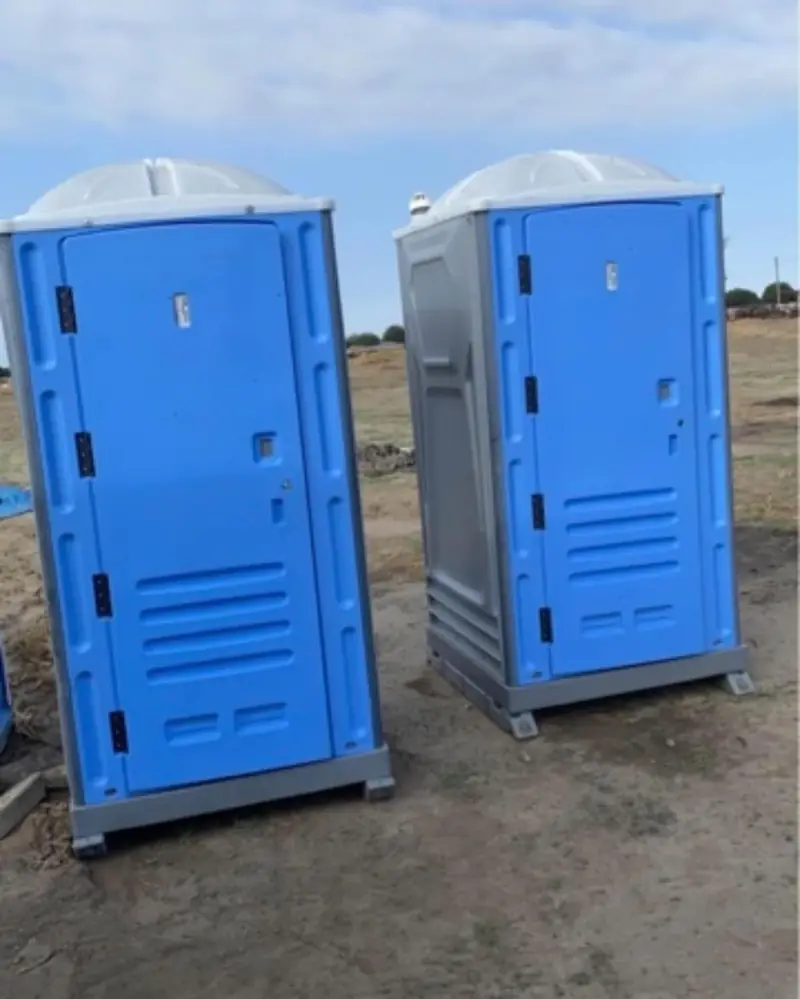
Job-site rental at a glance
- Billing
- 28-day cycles
- Service
- Weekly pump, clean, restock
- OSHA minimum
- 1 unit up to 20 workers; 1 per 40 above
- Washing
- Station beside each toilet group
- High-rise
- Satellite Highrise + lift kit
Toilet and washing rules for Texas job sites
Texas has no state OSHA plan for private employers, so federal OSHA 29 CFR 1926.51 applies.
| Workers on site | Minimum facilities (Table D-1) | Standard units needed |
|---|---|---|
| 1–20 | 1 toilet | 1 |
| 21–40 | 1 toilet seat + 1 urinal per 40 workers | 1 |
| 41–80 | 1 toilet seat + 1 urinal per 40 workers | 2 |
| 81–120 | 1 toilet seat + 1 urinal per 40 workers | 3 |
| 200+ | 1 toilet seat + 1 urinal per 50 workers | 4 at 200, then 1 per 50 |
Legal minimum vs. what works on a real crew
The legal minimum only counts heads. OSHA itself points to ANSI Z4.3, which plans for about 10 users per unit serviced once a week. That is the figure we use to keep units clean enough to count.
- 16 workers, 40-hour weeks: 1 unit by OSHA’s table; we suggest 2, or 1 cleaned twice a week.
- 60 workers: 2 units minimum; we suggest 6 with weekly service.
- Two shifts: ask for twice-weekly cleaning before adding units.
Job-site units we supply
Standard unit
The everyday job-site toilet. Small footprint, 60-gallon tank, easy to place beside a site trailer or at the edge of a pad.
High-rise unit
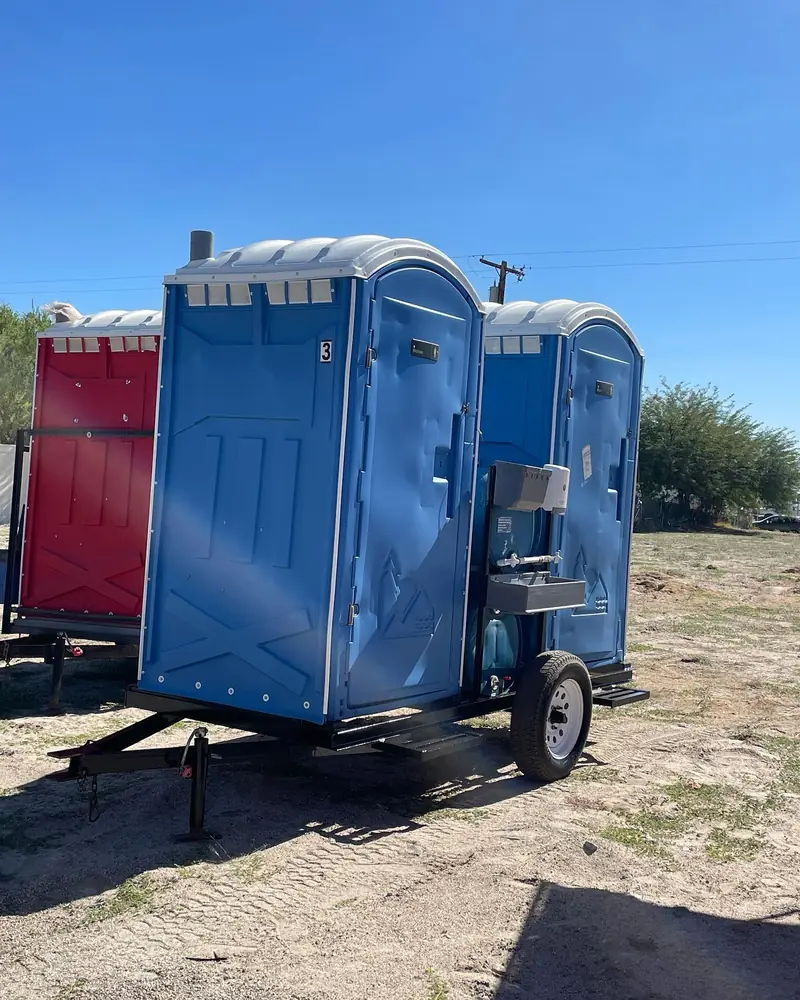
Satellite Highrise: 31.2″ wide without its roof so it rolls through standard doorways; a lift kit lets your crane or hoist raise it between floors. Its 38-gallon tank fills faster, so busy floors need more frequent cleaning.
Hand-wash station
Covers OSHA’s washing requirement with water, soap and paper towels, placed right next to the toilets.
What happens on a job-site service visit
Our driver pumps the tank, cleans the inside, recharges the deodorizer and restocks paper and soap, then logs the visit. If a unit has been tipped, damaged or moved, the driver reports it and we schedule a fix on the next route.
Keep service day smooth
- Keep a truck-width path to the unit; don’t box it in with materials or dumpsters.
- Share gate codes and badge or escort rules before service day, especially at port and industrial sites.
- Report tipped or damaged units right away.
- Ask for a move before grading changes the access road.
Frequently asked questions
How many porta potties does my crew need under OSHA?
Texas follows federal OSHA. 29 CFR 1926.51 Table D-1 requires 1 toilet for 20 or fewer workers, 1 toilet seat and 1 urinal per 40 workers for 20 or more, and 1 seat and 1 urinal per 50 at 200 or more. A standard unit has one seat and one urinal, so a 60-person crew needs at least 2 units.
Does a dirty toilet count toward the OSHA minimum?
No. OSHA has stated that a toilet in an unsanitary condition is not “provided,” so it doesn’t count. OSHA points to the ANSI Z4.3 guidance of servicing a unit used by up to 10 people at least once a week, which is why we plan around weekly cleaning.
Do I also need a hand-washing station?
1926.51(f) requires adequate washing facilities with water, soap and individual towels. On most job sites that means a two-user hand-wash station beside each group of toilets; we recommend one per 20 workers.
How is a construction rental billed?
In 28-day cycles. A real quote: $247.20 for the first 28 days (delivery included), $205 for each later 4-week period and $29 removal at the end, with weekly cleaning.
Can you lift a toilet onto an upper floor?
Yes, with the Satellite Highrise. It’s 31.2″ wide without the roof so it rolls through standard doorways, and an optional lift kit lets your crane or hoist raise it between floors.
What happens to job-site units during a hurricane warning?
Call us when a storm is forecast. Depending on the site, we lay units down, strap them to a fixed structure or pick them up before landfall, then reset them when the site reopens.